
CT Scan › CCTA
Coronary CTA and CT Angiography in Cypress TX
CT angiography maps arteries throughout the body using timed contrast, revealing narrowing, aneurysm and blockage in minutes. Coronary studies are interpreted by radiologists with cardiac CT training.
10 to 15 minute scan
Contrast required
IV placement needed
Report in 24 hours
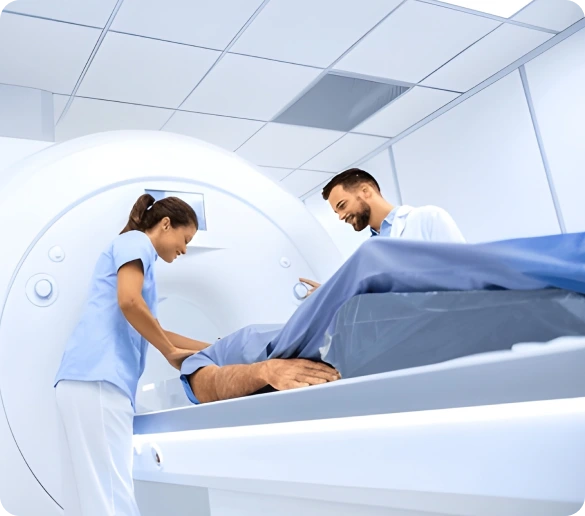
What a CT angiography shows
Detailed vessel imaging without entering an artery
Conventional angiography threads a catheter into the arterial system. CT angiography achieves much of the same picture by timing an intravenous contrast injection so the scanner captures images at the precise moment dye fills the vessels of interest.
Nothing enters an artery, the study takes minutes rather than hours and recovery is immediate, which is why CTA now handles the majority of vascular questions that once required catheterisation.
What CT angiography commonly evaluates
What the scan itself is like
An IV is placed in your arm and you lie on the table while contrast is injected by a pump at a set rate. A warm flushing sensation moves through your body as it goes in, which is expected and passes within a minute.
Coronary studies add ECG electrodes so images can be synchronised to your heartbeat. You will hold your breath for around ten seconds while the scan runs and the imaging portion itself is over in seconds.
Why heart rate matters for coronary CTA
Coronary arteries move constantly, so a slower steadier heart rate produces sharper images. A beta blocker is often given beforehand to bring the rate below sixty and nitroglycerin under the tongue widens the vessels for better visualisation.
CT Angiography at a glance
Scan time
10 to 15 minutes
Time at the center
Roughly 60 minutes
Radiation
Low dose protocols used
Fasting
Usually 4 hours
Referral
Required from your physician
Contrast
Always required
Report turnaround
Typically 24 hours
Before your appointment
Preparing for a CT angiogram
Preparation centres on the contrast injection and, for coronary studies, on getting your heart rate where it needs to be.
Report allergies and kidney history
Previous reactions to iodine contrast, kidney disease and dialysis all need disclosing in advance. Recent creatinine results are often requested before we clear you for the injection.
Avoid caffeine before a coronary study
Caffeine raises heart rate and works directly against the medication given to slow it. Skip coffee, tea and energy drinks for twelve hours before a coronary CTA appointment.
Review your medication list with us
Beta blockers may be given on arrival and nitroglycerin under the tongue before scanning. Erectile dysfunction medications interact dangerously with nitroglycerin and must be disclosed beforehand.
Fast for around four hours
An empty stomach reduces nausea from the contrast injection. Water is encouraged right up until the appointment since good hydration helps your kidneys clear the dye afterward.
Other MRI studies
Other scans available at our center
Looking for a different study? Start here.
CT Without Contrast
Studies needing no dye or IV access
High-Resolution CT Scan
Ultra thin slices for lung tissue detail
Vascular Ultrasound
Doppler flow, clots and carotid narrowing
Cardiac CT Scan
Coronary calcium scoring and plaque burden
Cardiac MRI
Heart muscle, function and scar assessment
Abdominal CT Scan
Kidney, gallbladder and other organ screening
Common questions
CT angiography questions patients ask
Book your CT angiography appointment
Forward the referral and we will review your medications, verify kidney function and coverage, then confirm a time at 18057 HWY 105 Suite 250 in Cypress.